Unsaturated Polyester Resin and epoxy resin are two widely used thermosetting materials in composite manufacturing. Both can be combined with fiberglass to produce lightweight and durable products, but they differ significantly in cost, curing chemistry, adhesion, shrinkage, and processing requirements.
In general, Unsaturated Polyester Resin is often preferred for cost-effective and high-volume FRP production. Epoxy resin is more commonly selected when strong secondary bonding, low cure shrinkage, or demanding structural performance is required.
However, neither resin is the best choice for every project. This guide compares their main characteristics and explains how to choose the right material for your application.
What Is Unsaturated Polyester Resin?
Unsaturated Polyester Resin, also known as UPR, is a thermosetting resin commonly supplied with a reactive diluent such as styrene. After the recommended initiator is added, the resin undergoes a crosslinking reaction and changes from a liquid into a rigid solid.
UPR is widely used with glass-fiber reinforcement to manufacture fiberglass-reinforced plastic, or FRP. Depending on the formulation, it can be processed by hand lay-up, spray-up, casting, pultrusion, resin transfer molding, sheet molding compound, and bulk molding compound.
Typical applications include boats, automotive panels, cooling towers, sanitary ware, pipes, tanks, construction panels, and composite molds.
It is important to remember that Unsaturated Polyester Resin is a broad material category. General-purpose, isophthalic, DCPD, tooling, flame-retardant, and low-styrene-emission grades are designed for different applications.
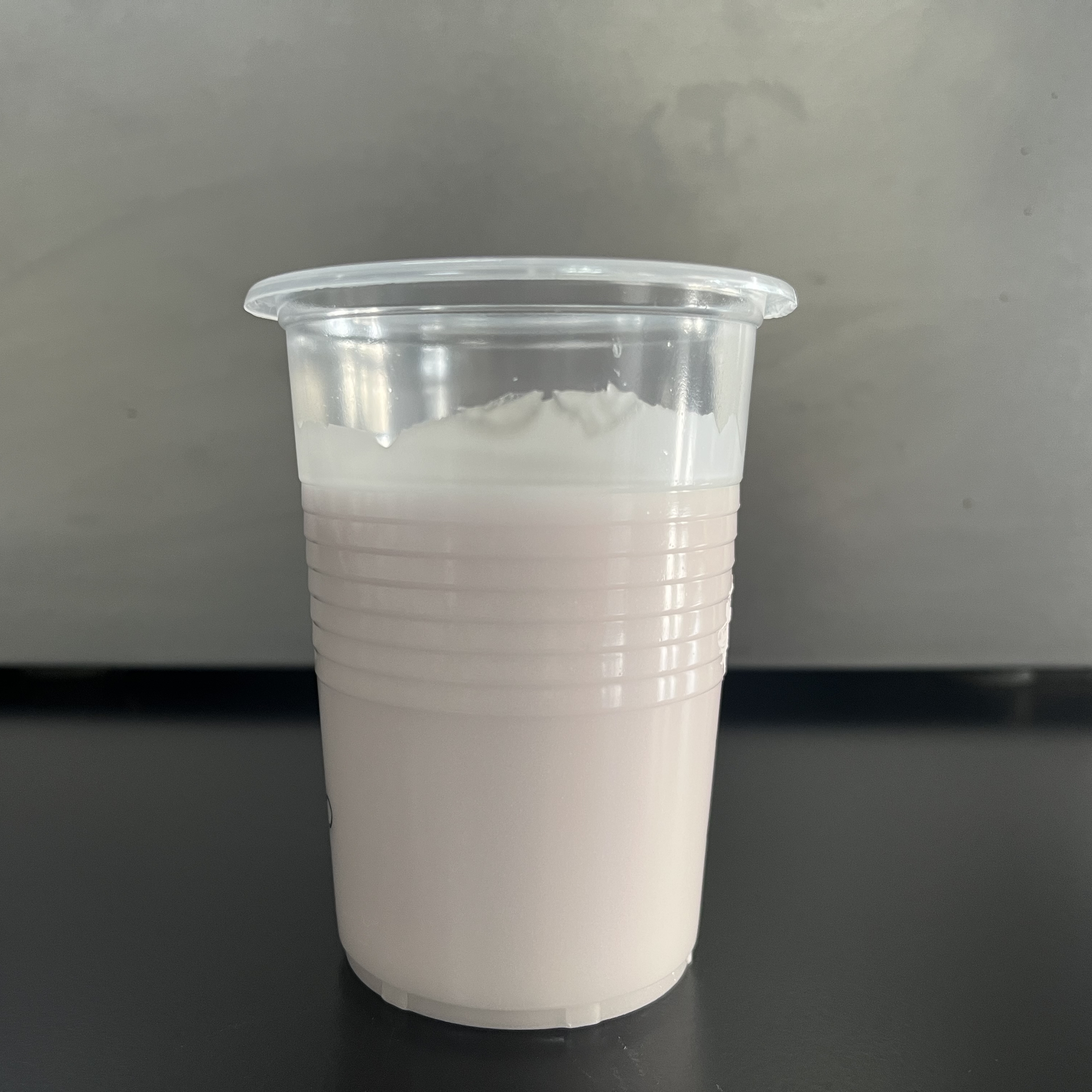
Unsaturated Polyester Resin sample shown on Huake Polymer’s official HS-243PTF product page.
What Is Epoxy Resin?
Epoxy resin is normally supplied as a two-component system consisting of resin and a compatible hardener. When the two components are mixed in the specified ratio, they react and form a highly crosslinked solid material.
Epoxy systems are commonly used for structural composites, adhesives, protective coatings, carbon-fiber parts, marine repairs, and precision tooling. They are particularly useful when a strong bond to an existing cured surface is required.
Epoxy resin should not be confused with epoxy vinyl ester resin. Although vinyl ester may be manufactured from an epoxy-based structure, it normally cures through a mechanism similar to Unsaturated Polyester Resin. Conventional epoxy uses a separate resin-and-hardener reaction.
Unsaturated Polyester Resin vs Epoxy Resin
| Factor | Unsaturated Polyester Resin | Epoxy resin |
| Curing system | Usually peroxide-initiated | Resin mixed with a specified hardener |
| Material cost | Generally lower | Generally higher |
| Secondary adhesion | More limited on cured surfaces | Usually stronger |
| Cure shrinkage | Generally higher | Generally lower |
| Production suitability | Cost-effective FRP manufacturing | Structural laminating and bonding |
| Processing speed | Often suitable for rapid production | Depends on formulation and hardener |
| Typical reinforcement | Mainly fiberglass | Fiberglass and carbon fiber |
| Main advantage | Production economy | Adhesion and dimensional control |
1. Curing Process
UPR and epoxy resin cure through different chemical reactions.
Unsaturated Polyester Resin usually requires a peroxide initiator. Some products are supplied as pre-promoted grades, meaning the accelerator system has already been added during production. Gel time can be influenced by resin temperature, workshop temperature, initiator type, and approved initiator dosage.
Epoxy resin requires a compatible hardener in an accurate mixing ratio. Adding extra hardener is not a reliable way to accelerate curing. An incorrect ratio may result in incomplete cure and poor final performance.
For both systems, working time, gel time, demolding time, and complete cure are different stages. A component that feels hard may still require additional curing before it reaches its intended properties.
Manufacturers should always follow the technical data sheet rather than adjusting the curing system without supplier approval.
2. Cost and Production Efficiency
Unsaturated Polyester Resin is generally more economical than epoxy resin. This is one reason it is widely used for medium- and high-volume FRP manufacturing.
UPR can support efficient production when the resin, reinforcement, mold, and curing system are properly matched. It is often suitable for businesses that need consistent output while controlling raw-material costs.
Epoxy resin usually costs more and may require more accurate proportioning or longer curing periods. However, a higher material price may be justified if its bonding or dimensional performance prevents failures and reduces rework.
The purchasing price alone should not determine the choice. Manufacturers should calculate the total cost of each acceptable finished part, including:
A lower-priced resin is not economical if it produces an unacceptable rejection rate. Similarly, using an expensive epoxy may provide little benefit when a qualified UPR already satisfies the product requirements.
3. Adhesion and Repair Performance
The difference in secondary adhesion is especially important.
Secondary bonding occurs when fresh resin is applied to a surface that has already cured. This is common in repairs, reinforcement, and the assembly of composite components.
UPR performs well during the original manufacture of a properly designed laminate. However, its adhesion to an old, fully cured composite may be more limited.
Epoxy resin is generally more suitable for bonding to properly prepared fiberglass, wood, metal, and other cured substrates. This is why it is frequently chosen for structural repairs.
Surface preparation remains critical. Dirt, moisture, oil, inadequate sanding, or poor workmanship can cause either system to fail.
For a new molded FRP part, UPR may be the more economical choice. For repairing or bonding an existing cured structure, epoxy often deserves stronger consideration.
4. Mechanical Performance
It is misleading to say that epoxy is always stronger than Unsaturated Polyester Resin.
The performance of a composite component depends on the entire laminate system, including:
Resin formulation
Reinforcement type
Fiber orientation
Fiber content
Laminate thickness
Void content
Curing conditions
Operating temperature
A well-produced fiberglass laminate using an appropriate UPR can outperform a poorly manufactured epoxy laminate.
The meaning of “stronger” must also be defined. Tensile strength, flexural strength, impact resistance, fatigue resistance, elongation, and interlaminar strength represent different performance characteristics.
When comparing products, use data generated by similar test methods and curing conditions. Do not compare the neat-resin strength of one material directly with the reinforced-laminate strength of another.
5. Cure Shrinkage and Dimensional Stability
Conventional UPR generally experiences more shrinkage during curing than epoxy. Depending on the component and process, this may contribute to warpage, internal stress, dimensional variation, or visible fiber patterns.
Epoxy’s generally lower cure shrinkage can be useful for precision tooling and components that require tight tolerances.
However, specialized UPR formulations can control shrinkage. Huake Polymer’s HS-243PTF Low Profile Controlled Tooling Unsaturated Polyester Resin, for example, is designed for composite mold production and shrinkage control.
This demonstrates why specific grades should be compared instead of assuming that every product in one resin family behaves in the same way.
6. Processing and Surface Finish
Processing requirements should be considered before changing resin systems.
Reinforcement sizing, chopped-strand mat binders, core materials, release agents, gelcoats, and paints must be compatible with the selected resin. Materials designed for a styrene-containing polyester system may not automatically work with epoxy.
Viscosity must also suit the production method. A resin intended for hand lay-up may not have the flow characteristics needed for resin infusion. A low-viscosity infusion resin may be difficult to control on a vertical surface.
UPR is widely used with established polyester gelcoat systems to produce attractive molded surfaces. Epoxy can also provide a high-quality finish, but the compatibility of primers, paints, and gelcoats should be confirmed.
When changing from one resin family to another, manufacturers should review the entire production system rather than replacing only the liquid resin.

Composite catamaran displayed on Huake Polymer’s official tooling-resin page, representing a typical marine FRP application.
7. Water, Chemical, and Heat Resistance
Both resin families can provide useful environmental resistance, but performance depends on the formulation.
A product exposed to occasional rain does not have the same requirements as a tank continuously immersed in warm water. Chemical performance also depends on the chemical type, concentration, temperature, and exposure time.
Heat resistance should be evaluated carefully. A technical data sheet’s heat-deflection temperature or glass-transition temperature should not automatically be treated as a continuous operating limit.
For demanding environments, buyers should provide suppliers with complete service conditions. Qualification testing may be necessary when long-term failure would create serious technical or financial consequences.
Which Resin Should You Choose?
Choose Unsaturated Polyester Resin When:
You are manufacturing new molded FRP products
Material cost is a major consideration
Medium- or high-volume production is required
Hand lay-up, spray-up, molding, or casting is used
The reinforcement and gelcoat are polyester-compatible
A suitable UPR grade meets the required performance
UPR is commonly considered for boats, automotive panels, sanitary ware, cooling towers, pipes, tanks, and general fiberglass components.
Choose Epoxy Resin When:
Strong secondary bonding is essential
An existing cured laminate must be repaired
Carbon-fiber reinforcement is being used
Low cure shrinkage is particularly important
The component has demanding structural requirements
Higher material cost can be justified by improved performance
Typical applications include structural repairs, bonded assemblies, high-performance composite components, and precision structures.
Frequently Asked Questions
Is epoxy always better than Unsaturated Polyester Resin?
No. Epoxy may offer better secondary adhesion and lower shrinkage, while UPR may provide more economical and efficient production. The better material depends on the application.
Can epoxy be applied over cured polyester?
A suitable epoxy can often bond to properly cleaned, dried, and mechanically prepared polyester laminates. The supplier’s repair procedure should be followed.
Can UPR and epoxy be mixed?
They should not be mixed unless the combined system has been specifically formulated and validated. Their curing mechanisms are different.
Which resin is better for boats?
UPR is widely used to manufacture new fiberglass boat components economically. Epoxy is commonly selected for structural bonding, high-performance laminates, and repairs.
Conclusion
The choice between Unsaturated Polyester Resin and epoxy resin depends on the project rather than a simple claim that one material is better.
UPR is often the practical choice for economical production of new molded fiberglass components. Epoxy is usually more suitable when secondary adhesion, low cure shrinkage, or demanding structural performance is the priority.
Before selecting a product, compare specific resin grades, curing requirements, reinforcement compatibility, service conditions, and total manufacturing cost. Providing this information to the resin supplier will also make it easier to identify an appropriate formulation.


